
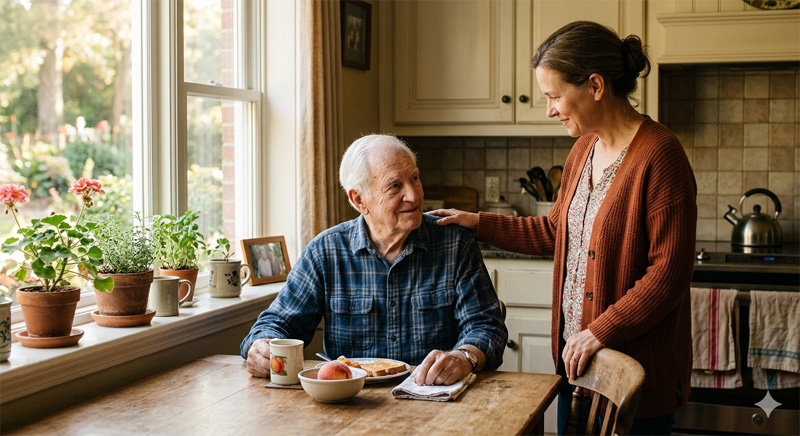
Caring for Someone with Parkinson's Disease
Parkinson's disease is a condition that affects the brain and makes movement harder over time. It is not a death sentence — many people live well with Parkinson's for years. But caregiving for someone with Parkinson's takes patience, creativity, and good information. You are in the right place.
Parkinson's usually gets worse little by little over years — not overnight. Most caregivers have time to learn and adapt.
Tremors, stiffness, slow movement, and balance problems are the most common symptoms. Everyday tasks take longer.
Parkinson's medications must be taken on a strict schedule — even 30 minutes late can cause significant problems. Never skip or delay doses without talking to the doctor.
Many people with Parkinson's have full mental clarity, especially in early stages. They deserve to be included in all decisions about their care.
Balance problems make falls very common. A home safety review is one of the most important things you can do.
Rushing someone with Parkinson's leads to falls and frustration. Build extra time into every morning routine and appointment.
Set phone alarms for every dose. Keep a backup supply in case of emergencies.
Remove throw rugs, add grab bars, and clear walkways. Non-slip socks, a shower chair, and a raised toilet seat make a big difference.
Exercise is one of the best things for Parkinson's. Even short daily walks help. Ask the doctor about physical therapy.
As Parkinson's progresses, swallowing can become difficult. If your parent coughs during meals or loses weight, tell the doctor.
Speech can become soft and hard to understand. Encourage them to speak slowly and clearly. Speech therapy can help significantly.
Some Parkinson's medications can cause hallucinations. Contact the doctor right away if this happens.
One fall is a warning. Two or more falls means the home environment and medications need to be reviewed urgently.
Some people with Parkinson's suddenly "freeze" mid-step and cannot move. This is a fall risk. Ask the doctor about strategies.
Depression is very common in Parkinson's — and very treatable. Watch for loss of interest, sadness, or pulling away from others.
If your parent coughs, chokes, or gets frequent chest infections, talk to the doctor about a swallowing evaluation.
"What stage of Parkinson's is my parent in, and what should I expect in the next year?"
"Which medications are most important, and what happens if a dose is missed or late?"
"Would physical therapy, occupational therapy, or speech therapy help right now?"
"Are there any Parkinson's specialists or movement disorder clinics in our area?"
"What are the signs that it is time for a higher level of care?"
When Parkinson's reaches its final stages, hospice shifts the focus to comfort, dignity, and quality of life. Many families wish they had called sooner — the support it brings can be life-changing.
Your loved one is having frequent falls or injuries, is losing significant weight, has serious swallowing difficulties, is sleeping most of the day, or is no longer able to communicate meaningfully.
Many people with advanced Parkinson's develop significant cognitive decline. When this happens alongside physical decline, it is a good time to talk to the doctor about hospice.
Medicare's hospice benefit covers care when a doctor certifies life expectancy is six months or less if the disease follows its expected course. Many people on hospice live longer than expected.
Nurses, aides, social workers, and chaplains come to your home. They manage symptoms, provide personal care, give you rest, and are reachable by phone at any hour. Bereavement support is included.
What has helped you? What do you wish you had known? Your words help other caregivers feel less alone.

Simple, calming pages with bold lines — a soothing activity for seniors and loved ones with memory challenges.
Get It on Amazon