
Caring for Someone with Alzheimer's Disease
Alzheimer's disease is the most common form of dementia. It gradually takes away a person's memory, thinking, and ability to do everyday things. Caring for someone with Alzheimer's is one of the most challenging — and most loving — things a person can do. You are not alone in this.
Alzheimer's is a physical disease that damages brain cells. Forgetting someone's name or losing keys is not Alzheimer's. Forgetting what keys are for might be.
Early stage: mild memory issues. Middle stage: more confusion, behavior changes, need for help with daily tasks. Late stage: full-time care needed. Each stage can last years.
Wandering, leaving the stove on, falling, and taking wrong medications are the most serious safety risks. Address these early.
As the disease progresses, your parent may struggle to find words, repeat themselves, or say things that do not make sense. They still feel emotions — connection matters even when words fail.
Alzheimer's caregiving is exhausting. Your wellbeing matters as much as theirs. Getting help is not giving up — it is how you last.
Predictable daily routines reduce anxiety and confusion. Same wake time, same meal times, same bedtime activities whenever possible.
Remove clutter, lock up medications and cleaning products, cover stove knobs, and consider door alarms if wandering is a concern.
Use short sentences. Ask one question at a time. Give gentle reminders rather than corrections. Never argue about what they remember.
If your parent thinks it is 1985, do not correct them harshly. Ask about their world instead. This approach causes less distress for everyone.
Music from their younger years is often remembered even in late-stage Alzheimer's. It can calm agitation and spark connection.
Talk to an elder law attorney about legal documents while your parent can still participate in decisions. This protects everyone.
If your parent is leaving home and getting lost, this is a serious safety emergency. Consider door alarms, GPS devices, and the Safe Return program.
Many people with Alzheimer's become more confused, agitated, or upset in the late afternoon and evening. Talk to the doctor about strategies.
As Alzheimer's progresses, some people resist bathing, dressing, or eating. This is common. Ask the doctor and an occupational therapist for strategies.
Sudden worsening of confusion — especially with fever or pain — may indicate a UTI or other infection. UTIs cause dramatic confusion changes in older adults.
If you are at the breaking point, this is a warning sign too. Reach out for respite care before a crisis happens.
"What stage of Alzheimer's is my parent in, and what changes should I prepare for?"
"Are there medications that might help, and what are the realistic benefits and side effects?"
"When should we consider memory care or a care facility?"
"What local resources are available — adult day programs, respite care, caregiver support groups?"
"Is a referral to a neurologist or memory care specialist appropriate?"
Hospice for Alzheimer's means choosing to focus on comfort, dignity, and quality of life when the disease has reached its final stages. Many families wish they had called sooner.
Your loved one can no longer speak or communicate meaningfully, cannot walk even with help, needs full assistance with eating, bathing, dressing, and toileting, or has difficulty swallowing and is losing significant weight.
Repeated urinary tract infections or pneumonia in late-stage Alzheimer's often indicate the body is no longer able to fight illness effectively. This is a conversation to have with the doctor.
Medicare's hospice benefit covers care when a doctor certifies life expectancy is six months or less if the disease follows its expected course. This does not mean your loved one will die in six months — many live longer.
A team comes to your home — nurses, aides, social workers, and chaplains. They manage symptoms, provide personal care, give you a break, and are available by phone around the clock. Bereavement support for the family is included.
What has helped you? What do you wish you had known? Your words help other caregivers feel less alone.
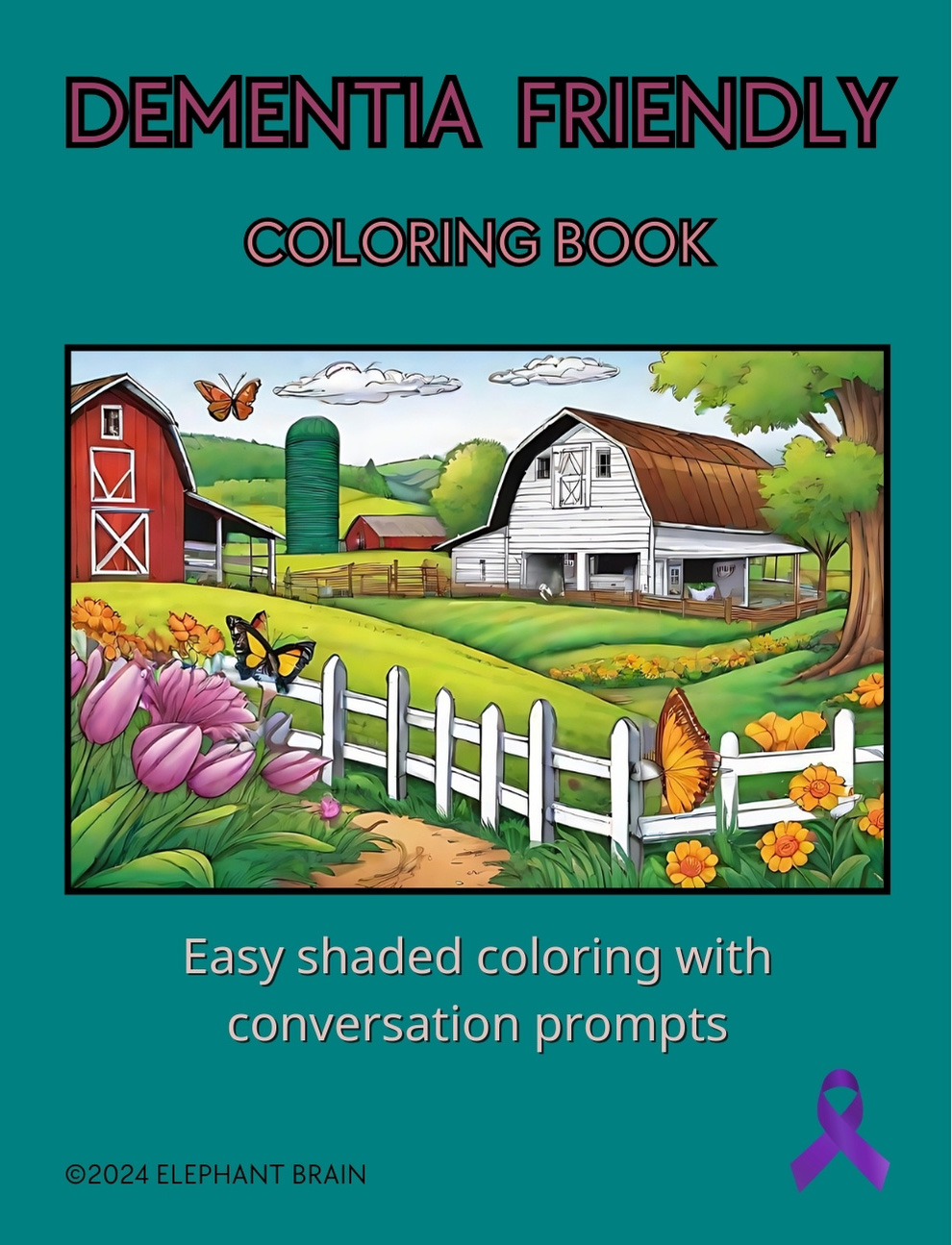
Simple, calming pages with bold lines — a soothing activity for seniors and loved ones with memory challenges.
Get It on Amazon